

What is AI Red Teaming? A Practical Guide

Red teaming has been a fixture of security practice for decades. A team of people thinks like an attacker, probes a system for weaknesses, and reports back before the real attackers get there. Simple enough concept. Apply it to AI systems, though, and the familiar framework starts to strain in interesting ways.
AI red teaming has the same goal as traditional red teaming: find the failures before someone else does. But the nature of AI systems (non-deterministic, behavior-driven, constantly evolving) means the methods look different, the scope is different, and the definition of "failure" is different. Running a traditional pen test against an LLM-powered application and calling it done is a bit like testing whether your front door is locked and ignoring the open window next to it.
What AI Red Teaming Tests For
Traditional security testing focuses on infrastructure: open ports, unpatched software, misconfigured access controls, injectable inputs. These still matter for AI applications, but they're not the primary risk surface. The model itself is the risk surface.
AI red teaming tests how a model or AI application behaves under adversarial conditions. That includes:
Jailbreaks: Inputs crafted to bypass safety guidelines and produce restricted outputs. This includes direct attempts ("ignore your instructions") as well as more sophisticated approaches like role-playing scenarios, fictional framing, and multi-step manipulation. Getting past built-in guardrails is sometimes a 45-minute exercise, which should give any security team pause.
Prompt injection: Instructions embedded in user input or external content designed to override the model's intended behavior. Particularly critical in agentic applications that process content from untrusted sources. We've covered what prompt injection is and how it works in detail separately.
Data extraction: Attempts to get the model to reveal its system prompt, training data, or information from other users' sessions. Membership inference, data reconstruction, and context leakage all fall here. The OWASP LLM Top 10 lists sensitive information disclosure as one of the most common real-world risks.
Harmful and policy-violating outputs: Testing whether the model can be induced to produce content it's designed to refuse: dangerous instructions, discriminatory content, disinformation, or outputs that create legal exposure.
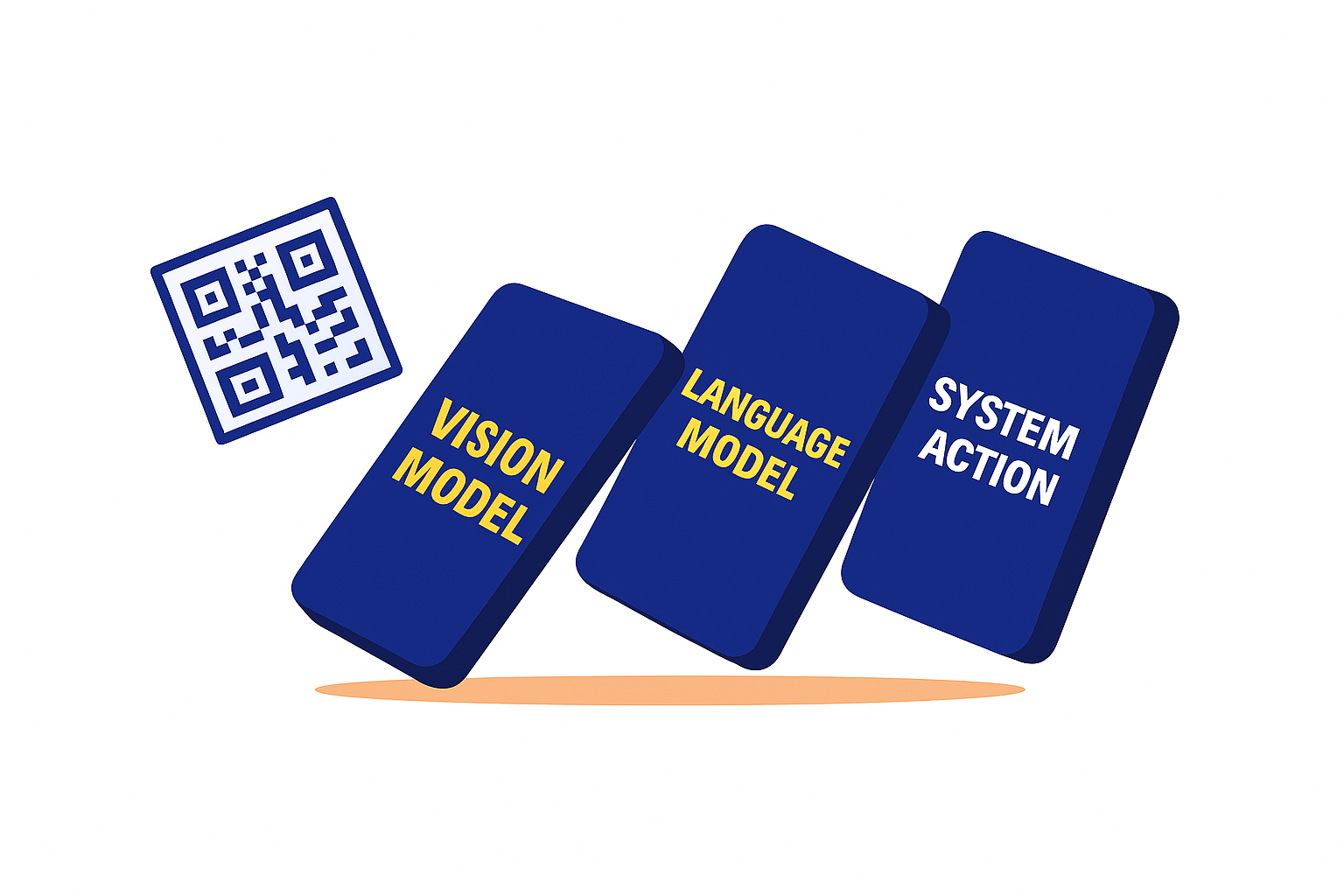
Adversarial robustness: Testing whether small perturbations to inputs cause unexpectedly large changes in model behavior. Especially relevant for models that process images, audio, or sensor data alongside text. Multimodal AI expands this attack surface considerably.
Agentic failure modes: For applications where the model can take actions, testing whether those actions can be misdirected, exploited for privilege escalation, or used to cause downstream harm in connected systems. Agentic AI introduces an entirely different set of attack patterns that traditional red teaming wasn't designed to find.
How It's Different from Traditional Pen Testing
The biggest practical difference is that AI systems are non-deterministic. Run the same test twice and you may get different results. That makes pass/fail testing unreliable. A red team exercise that finds no vulnerabilities on a given day cannot guarantee the system is safe, because the model's behavior is probabilistic and context-dependent. "We tested it and it was fine" is not a security posture.
It also means the scope of testing is theoretically unlimited. A traditional system has a finite set of endpoints, inputs, and code paths. A language model can respond to an almost infinite range of inputs, and the ways it can fail are similarly varied. AI red teaming requires prioritization: which failure modes matter most for this specific application, with its specific capabilities and user base?
The other major difference is pace. Software has a release cycle. AI systems can change continuously: fine-tuning, system prompt updates, new tools being connected, underlying model updates from the provider. A security posture that was adequate last month may not be adequate today. This is why the NIST AI Risk Management Framework emphasizes continuous monitoring rather than point-in-time assessment.
Manual vs. Automated Red Teaming
Early AI red teaming was almost entirely manual: researchers sat down and tried to break a model. This produces high-quality, creative attacks, but it doesn't scale. A manual exercise might generate hundreds of test cases. Real-world deployments need to be tested against hundreds of thousands.
Automated red teaming uses AI models to generate adversarial prompts at scale, exploring the attack surface systematically rather than relying on the creativity of individual researchers. It finds different things than manual testing: broader coverage and consistent regression testing across updates, but fewer of the novel, context-specific attacks that humans catch. Using an LLM to judge another LLM has real limits, and the same principle applies here.
The practical answer is both. Automated testing for coverage and regression; human testing for the high-stakes scenarios that require genuine adversarial creativity.
Why One-Time Testing Isn't Enough
A red team engagement that happens once, at deployment, is better than nothing. It is not a security program.
AI systems change. The model gets updated. The system prompt gets revised. New tools and integrations get added. User behavior evolves in ways that create new risks. A security finding that was fixed in one update can be reintroduced in the next. Running a red team exercise at launch and then never again is roughly equivalent to installing a smoke detector and removing the batteries: the compliance box is checked, but the house is not safe.
Treating AI red teaming as a continuous practice rather than a point-in-time audit reflects how AI systems actually work. The goal isn't a clean report for a quarterly review. It's ongoing visibility into how the system behaves under adversarial conditions, across every version, so that failures are caught before they become incidents.
That requires infrastructure, not just a team. Testing pipelines, behavioral baselines, anomaly detection, and feedback loops between findings and deployment decisions. The organizations getting this right are building it as a practice, and starting before something goes wrong rather than after.
Related posts
You hired a brilliant coding agent. Who supervises it?
DeepKeep Joins the Microsoft for Startups Pegasus Program to Advance Enterprise AI Security
DeepKeep Partners with TrueFoundry to Bring Runtime AI Security to the AI Gateway

AI Firewall Action Design: Block, Redact, Replace, or Alert
Inline vs. Out-of-Band: Where Should AI Security Actually Sit?
Your AI Speaks 100 Languages. Your AI Security Layer Doesn't.
The EU AI Act Readiness is an Evidence Problem for AI Security Teams

InkJect: The Visual Prompt Injection That Text Defenses Were Never Built to Stop

What Is Prompt Injection? How It Works and How to Stop It
Agentic AI Security: The Attack Surface Nobody Mapped Yet

DeepKeep Selected as EIC Accelerator Winner: Europe Bets on AI Security
DeepKeep Launches Vibe AI Red Teaming: A New Approach to AI Security
The 45-Minute AI Lobotomy: Why Built-In Guardrails Are Dead
The AI Red Teaming Reality Check: How DeepKeep Delivers on OWASP
A Rotten Apple Spoils the Image Generation

Why LLM-as-a-Judge Isn't Enough
Multimodal AI is Smarter. Unfortunately, so are The Attacks.
You Can’t “Detect” a Jailbreak. Here’s What to Do Instead

Two Smart AI Models. Zero Common Sense.

Top Three Scenarios for PII Leakage in GenAI

DeepKeep Launches GenAI Risk Assessment Module

DeepKeep Comes out of Stealth to Safeguard GenAI with AI-Native Security and Trustworthiness
